

Education is changing as technology becomes a bigger part of everyday life. Students no longer depend only on printed textbooks, classroom lectures, and traditional study materials. Today, digital learning platforms, educational applications, online courses, and artificial intelligence tools are creating new ways to access information and develop skills.
AI in education refers to the use of artificial intelligence technologies to support teaching, learning, assessment, and educational management. These technologies can help explain difficult subjects, identify learning patterns, prepare educational materials, and provide support based on individual learning needs.
For example, a student who struggles with mathematics can use an AI-powered learning tool to receive a step-by-step explanation of a problem. Another student who is learning a new language may use an educational application that provides vocabulary exercises and feedback. These tools can make certain learning activities more flexible and accessible.
Teachers can also use AI to prepare lesson outlines, organize educational resources, develop practice questions, and support classroom activities. This does not mean that artificial intelligence replaces teachers. Instead, it can provide additional tools that help educators manage some tasks and focus more attention on students.
However, using AI in education also creates important questions about accuracy, privacy, academic honesty, and the role of human teachers. Students need to understand how to use these tools responsibly instead of depending on them for every answer.
In this guide, we will explore how artificial intelligence is changing education, its practical applications, its benefits and limitations, and how students and teachers can use AI tools effectively.
What Is AI in Education?
AI in education means applying artificial intelligence to different activities related to teaching and learning. It includes software and digital systems that can process information, recognize patterns, generate educational content, and provide assistance based on user input.
Traditional educational methods generally involve teachers explaining lessons, students studying textbooks, and examinations measuring their understanding. These methods remain important, but students do not always learn at the same speed or in exactly the same way.
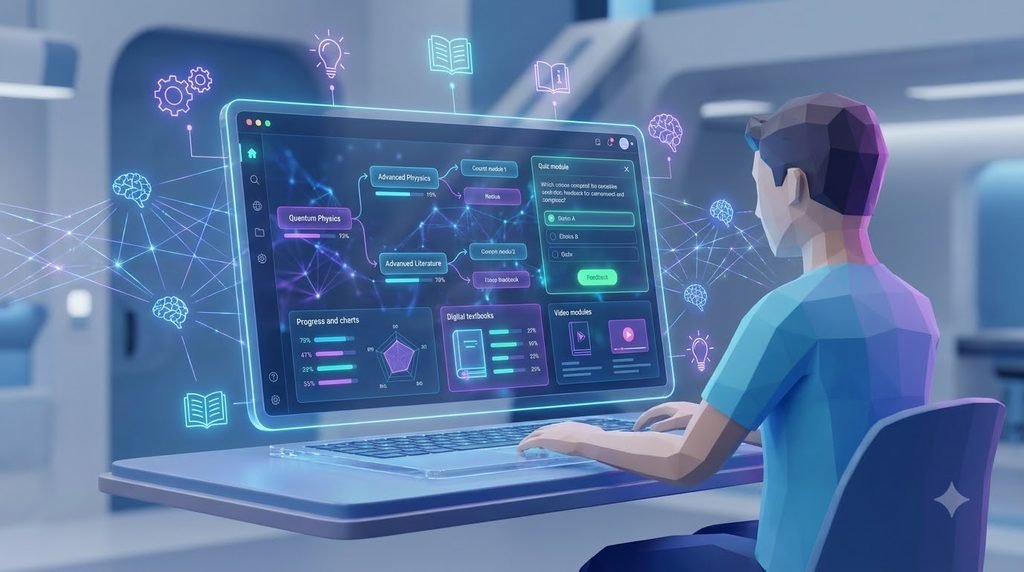
Artificial intelligence can support more flexible learning experiences. Some educational systems can adjust practice questions according to a student’s performance. Other tools can explain a topic in simpler language, translate educational material, or provide additional examples.
For example, imagine two students studying the same science chapter. One student understands the lesson quickly, while the other needs more explanations. An AI-supported learning platform may provide different exercises or explanations based on their individual progress.
This approach is connected with personalized learning, which aims to make education more suitable for the needs, abilities, and progress of individual students.
How Is AI Different from Traditional Learning Technology?
Educational technology has existed for many years. Computers, digital textbooks, recorded lectures, and online learning platforms have already changed how students access educational information.
However, many traditional digital learning tools provide the same materials to every user. They may display videos, quizzes, or reading exercises without adjusting their content according to a student’s individual needs.
AI-powered educational tools can offer additional capabilities. Depending on their design, they may analyze responses, recognize areas where a student needs more practice, or generate explanations for specific questions.
Traditional Learning Technology
A traditional educational website may provide a fixed lesson about mathematics. Every student who opens that lesson receives the same explanation, examples, and exercises.
This can be useful, but it may not provide enough flexibility for students who need additional support or different levels of difficulty.
AI-Supported Learning
An AI-supported learning platform may analyze a student’s answers and provide additional practice in areas where the student is struggling. It may also explain a concept using different examples or simpler language.
For instance, if a student repeatedly makes mistakes when solving fractions, an educational AI tool may suggest more fraction exercises and explain the steps involved.
These systems are not perfect, and their recommendations need to be reviewed. However, they can provide additional learning support when used appropriately.
Why Is Artificial Intelligence Becoming Important in Education?
Students and teachers face different challenges in modern education. Students may need help understanding difficult subjects, finding suitable study resources, or preparing for examinations. Teachers often need to manage lesson planning, assignments, assessments, and classroom activities.
Artificial intelligence offers tools that can assist with some of these activities.
- Personalized learning: Some AI systems can adjust educational activities according to student performance.
- Learning support: AI tools can explain difficult topics and provide additional examples.
- Language assistance: Educational applications can help students practice vocabulary, grammar, and translation.
- Teaching preparation: Teachers can use AI to create draft lesson plans, worksheets, and practice questions.
- Educational accessibility: Some tools provide text-to-speech, speech-to-text, translation, and other accessibility features.
- Progress analysis: Certain learning platforms can organize performance information and highlight areas that may require attention.
These applications can support different educational environments, including schools, universities, training centers, and independent online learning.
How Does AI Work in Education?
AI educational systems use different technologies depending on the task they perform. Some analyze written answers, others process spoken language, and some use machine learning to study learning patterns.
1. Collecting Learning Information
An educational AI system may receive information such as quiz answers, selected learning activities, written questions, or progress records. This information helps the system understand what a student is working on.
For example, an online mathematics platform may record which questions a student answers correctly and which topics require additional practice.
2. Analyzing Student Responses
The system can process available information to identify patterns. Depending on its design, it may recognize repeated mistakes, identify areas of difficulty, or classify responses according to specific learning objectives.
For example, if a student repeatedly struggles with multiplication, a learning platform may identify multiplication as an area that needs more practice.
3. Providing Learning Support
After analyzing the information, the system may suggest exercises, provide explanations, or recommend educational materials. Some tools can also generate examples based on a student’s question.
For example, a student learning basic English may request five simple sentences using a particular word. An AI tool can generate examples that the student can read and practice.
4. Reviewing Progress
Some educational platforms display progress reports that help students and teachers understand learning activities. These reports may show completed lessons, quiz performance, and topics that need further attention.
However, an AI-generated assessment does not provide a complete picture of a student’s knowledge or abilities. Teachers and students should consider classroom performance, practical understanding, and other forms of assessment as well.

Major Applications of Artificial Intelligence in Education
Artificial intelligence can support many educational activities. From helping students understand difficult lessons to assisting teachers with classroom preparation, AI tools are being used in different ways across modern learning environments.
1. Personalized Learning Experiences
Every student has different learning abilities, interests, and educational needs. Some students understand a topic after one explanation, while others need additional examples and practice.
AI-powered learning platforms can use information about student performance to suggest suitable learning activities. Depending on the platform, the system may recommend easier exercises, more advanced questions, or additional explanations.
For example, a student learning algebra may understand basic equations but struggle with equations containing multiple steps. An AI-supported platform can provide additional practice focused on those specific skills.
Personalized learning can make study activities more flexible, but students should not rely only on automated recommendations. Teachers can help determine whether the suggested learning path is appropriate.
2. AI-Powered Virtual Tutors
Virtual tutors are digital learning assistants that provide educational support through software applications or online platforms. Some use AI to answer questions, explain lessons, and generate practice activities.
A student studying biology may ask for a simple explanation of photosynthesis. A virtual tutor can provide a definition, describe the basic process, and offer examples that make the topic easier to understand.
Students can also request alternative explanations when they do not understand the first response.
However, an AI tutor is not a complete replacement for a qualified teacher. It may provide inaccurate information, misunderstand a question, or fail to recognize when a student needs a different teaching approach.
3. Automated Practice and Assessment
Assessments help students and teachers understand how well educational material has been learned. AI-supported platforms can assist with certain types of assessment and practice activities.
For example, a digital learning platform may automatically check answers to multiple-choice questions and display a student’s score. Some systems can also analyze selected written responses and provide feedback.
Automated assessment can reduce repetitive checking for certain tasks, but not every educational activity can be evaluated reliably by software. Essays, creative work, practical skills, and complex reasoning may require human evaluation.
4. Language Learning and Translation
Learning another language requires regular practice, vocabulary development, listening skills, and an understanding of grammar.
AI-powered language applications can help students practice conversations, learn new words, translate sentences, and receive feedback on written language.
For example, a beginner learning English can ask an AI learning assistant to explain the difference between present simple and present continuous tense. The tool can provide example sentences and practice questions.
Some language applications also support speech recognition, allowing learners to practice pronunciation. However, automated pronunciation feedback may not always identify every mistake correctly.
5. Creating Educational Materials
Teachers and educational content creators often need to prepare worksheets, revision notes, classroom activities, and practice questions.
AI tools can assist with preparing initial drafts of these materials. A teacher might provide a topic and ask an AI assistant to suggest ten beginner-level questions for a classroom exercise.
The teacher can then review the questions, correct mistakes, adjust their difficulty, and make sure they match the lesson objectives.
This approach can support preparation, but educational materials should always be checked before being shared with students.
6. Supporting Students with Disabilities
Technology can help make educational resources more accessible to students with different learning needs. Some AI-supported applications provide features such as speech-to-text, text-to-speech, image descriptions, and language assistance.
For example, speech-to-text software can convert spoken words into written text. This may help some students who find typing difficult. Text-to-speech tools can read written material aloud, providing another way to access information.
These tools can improve accessibility, although their suitability depends on the student’s needs, the accuracy of the software, and the available accessibility support.
7. Online Learning and Educational Platforms
Online education allows students to access lessons and learning resources through the internet. AI features can add more interactive support to some online learning platforms.
For example, a digital course platform may recommend lessons based on a student’s previous activities. Another system may provide an AI assistant that answers questions about course topics.
These features can make online learning more interactive, but students still need discipline, motivation, and a clear study routine to complete their courses successfully.
How Teachers Can Use Artificial Intelligence
Artificial intelligence can also support teachers in their daily responsibilities. Educators may use AI tools to prepare teaching materials, organize information, and explore different ways of explaining a topic.
Preparing Lesson Plans
Teachers can use AI assistants to prepare draft lesson outlines based on a subject, grade level, and learning objective.
For example, a teacher preparing a science lesson about the solar system can request an outline that includes an introduction, important concepts, classroom questions, and a short revision activity.
Generating Classroom Activities
AI tools can suggest quizzes, discussion questions, educational games, and group activities. Teachers can adapt these suggestions according to the students’ age and educational level.
Organizing Educational Resources
Teachers often work with large collections of notes, presentations, worksheets, and other educational materials. AI-powered tools may help summarize documents, classify information, and organize draft resources.
Supporting Student Feedback
Some educational platforms can help teachers identify patterns in quiz results and student performance. This information may help educators decide which subjects need further explanation.
Teachers should still review the information carefully and consider individual student circumstances before making educational decisions.
Popular AI Tools That Can Support Learning
Several digital services offer AI features that students and teachers can explore. Their features, availability, and pricing may differ by country, account, and subscription plan.
ChatGPT
ChatGPT can help students understand concepts, generate practice questions, improve writing, and explore educational topics. It can also help teachers prepare draft learning materials.
Google Gemini
Google Gemini provides AI assistance for questions, explanations, learning, and other supported activities. Students can use it to explore topics and request examples.
Khan Academy and Khanmigo
Khan Academy provides educational lessons and practice resources. Its AI-powered learning experience, Khanmigo, is designed to support learning and teaching in supported locations and plans.
Duolingo
Duolingo is a language-learning platform that offers interactive lessons and exercises. Some of its subscription plans include additional AI-supported features.
Quizlet
Quizlet provides digital study materials, flashcards, and learning activities. Its available study and AI features depend on the current product and plan.
Before choosing an educational tool, students and teachers should review its features, age requirements, privacy policy, pricing, and availability.
Practical Example: Using AI to Study Science
Imagine a student preparing for a science examination. The student has difficulty understanding the water cycle and wants a simple explanation.
The student can use an AI learning assistant in the following way:
- Ask for an explanation: Request a beginner-friendly explanation of evaporation, condensation, and precipitation.
- Request examples: Ask for everyday examples that explain each stage of the water cycle.
- Practice questions: Request a short quiz to test understanding of the lesson.
- Review mistakes: Ask the tool to explain why an incorrect answer is wrong.
- Check the textbook: Compare the explanation with the school’s official learning material.
This process allows AI to act as an additional study resource. The student still needs to understand the lesson, complete the exercises, and follow the school’s examination requirements.
Benefits of Artificial Intelligence in Education
AI can offer several advantages for students, teachers, and educational institutions. Its usefulness depends on how the technology is selected and applied.
1. Learning at an Individual Pace
Students do not always learn at the same speed. Some need additional practice, while others are ready to explore more advanced material.
AI-supported learning systems can provide different exercises and explanations based on available performance information. This can help students work on areas where they need more support.
2. Additional Learning Support
Students may have questions while studying at home or preparing for an examination. Educational AI tools can provide explanations and examples when a teacher is not immediately available.
This additional support can be useful, although students should verify important information with textbooks and trusted educational resources.
3. Access to Different Learning Resources
Digital learning platforms can provide students with lessons, videos, practice questions, and interactive educational activities. AI features may help organize these resources according to a student’s interests or learning progress.
This can create additional opportunities for independent learning, particularly for students who have access to suitable devices and internet services.
4. Support for Teachers
Teachers may use AI to prepare draft lesson plans, generate practice exercises, organize educational information, and explore alternative explanations.
These tools can assist with certain preparation tasks, giving educators more opportunities to focus on teaching, classroom interaction, and student support.
5. Language and Accessibility Assistance
Translation, speech recognition, and text-to-speech tools can make some educational materials easier to access. Students may use these features to understand unfamiliar vocabulary or interact with content in different ways.
Accessibility tools can be particularly valuable when they are selected according to individual learning requirements.
6. Support for Lifelong Learning
Education does not end when someone finishes school or university. People continue learning new skills throughout their careers and personal lives.
AI-supported educational applications can help adults explore unfamiliar subjects, practice new skills, and organize independent learning activities.
Challenges and Disadvantages of AI in Education
Although AI offers useful educational opportunities, it also creates challenges that schools, teachers, students, and families need to understand.
1. Incorrect Educational Information
AI tools can sometimes produce incorrect explanations, inaccurate facts, or misleading answers. A response may sound convincing even when it contains mistakes.
This can be a serious problem when students use AI-generated information without checking it against reliable educational resources.
Students should compare important explanations with textbooks, official course materials, and guidance from qualified teachers.
2. Overdependence on AI Tools
If students depend on AI for every homework question, they may miss opportunities to develop independent thinking and problem-solving skills.
For example, asking an AI system to solve every mathematics problem without understanding the steps may help complete an assignment, but it does not necessarily improve mathematical ability.
AI should be used to understand difficult concepts and practice skills, not as a substitute for personal effort.
3. Academic Honesty and Plagiarism
Students may be tempted to submit AI-generated essays, reports, or assignments as their own work. This can violate school or university academic policies.
Educational institutions have different rules about permitted AI assistance. Students should understand these rules before using AI in their assignments.
A responsible approach is to use AI for brainstorming, explanations, and learning support while producing and checking the final work according to the institution’s requirements.
4. Privacy and Student Data
Educational applications may collect information about students, including account details, learning activity, assessment results, and uploaded documents.
Schools and families should understand how this information is processed, stored, and protected.
Students should avoid sharing passwords, personal identification information, private records, or confidential school documents with AI tools unless the service has been approved for that purpose.
5. Unequal Access to Technology
Not every student has access to a modern computer, reliable internet connection, or paid educational applications.
This creates a digital divide between students who can use advanced learning technology and those who have fewer digital resources.
Schools and education authorities need to consider affordability and access when introducing AI-based educational systems.
6. Limited Human Interaction
Education is not only about receiving information. Students also develop communication skills, teamwork, confidence, creativity, and social understanding through interaction with teachers and classmates.
AI tools cannot fully replace these human experiences. If digital learning is used without sufficient classroom interaction, some important educational activities may receive less attention.
7. Bias and Unfair Results
AI systems can reflect limitations or biases present in their training data and design. This may affect how they explain subjects, evaluate responses, or provide recommendations.
Educational institutions should evaluate AI tools carefully and avoid treating automated decisions as automatically fair or correct.
How Students Can Use AI Responsibly
Students can benefit from artificial intelligence when they use it as a learning assistant rather than a shortcut for avoiding study.
Ask AI to Explain, Not Just Answer
Instead of asking for the final answer to a question, request a step-by-step explanation. This helps students understand the process behind a solution.
Use AI for Revision
Students can request practice questions, flashcard ideas, and short summaries to review subjects before examinations. They should compare the material with their official syllabus.
Check Important Facts
Always verify important facts, definitions, formulas, and historical dates using reliable educational resources.
Follow Academic Rules
Students should check their school’s AI policy before using generated content in assignments, projects, or examinations.
Keep Practicing Independently
After receiving an explanation, try solving a similar question without assistance. Independent practice helps students determine whether they have actually understood the topic.
How Schools and Universities Can Introduce AI
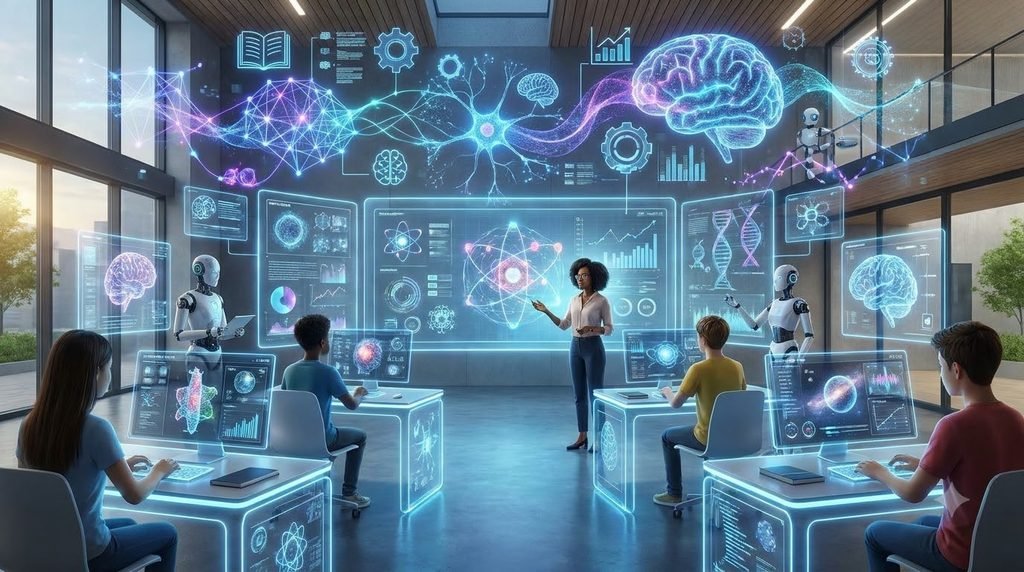
Introducing artificial intelligence into an educational institution requires more than simply providing students with access to AI applications. Schools and universities need to consider educational goals, teacher training, student privacy, available infrastructure, and responsible technology use.
1. Choose Tools That Support Educational Goals
Schools should identify what they want to improve before selecting an AI system. Some institutions may need tools for language learning, while others may be interested in accessibility, student practice, or educational administration.
Selecting technology according to a clear educational purpose makes it easier to evaluate whether the system provides meaningful value.
2. Train Teachers and Educational Staff
Teachers need opportunities to understand how AI systems work, where they can be useful, and what limitations they have.
Training can cover responsible AI use, checking generated information, protecting student data, and selecting appropriate educational applications.
3. Establish Clear Student Guidelines
Educational institutions should explain when students can use AI, which activities require independent work, and how AI assistance should be acknowledged.
Clear guidelines can help students understand the difference between using AI as a learning resource and submitting generated work in ways that violate academic policies.
4. Protect Student Information
Schools should evaluate privacy and security before introducing AI applications that process student information. They should understand the provider’s data policies, account controls, storage practices, and access permissions.
5. Evaluate Educational Results
After introducing a tool, schools should evaluate whether it improves the learning experience. Feedback from teachers and students can help identify technical problems, accessibility issues, and areas that require improvement.
Educational technology should be reviewed regularly instead of being adopted simply because it is new.
The Future of Artificial Intelligence in Education
Artificial intelligence is developing rapidly, and its role in education may expand as digital learning systems become more capable. Future educational applications may offer more interactive lessons, improved accessibility, and additional support for different learning needs.
More Personalized Learning Systems
Future educational platforms may become better at identifying individual learning difficulties and suggesting suitable learning activities. They may use information from different educational exercises to provide more relevant practice.
However, personalized recommendations will still need to be evaluated by teachers and educational professionals.
Interactive Virtual Learning Environments
AI may become more closely connected with simulations, virtual environments, and interactive educational experiences. Students could explore scientific concepts, historical settings, or technical processes through digital activities.
These experiences may provide additional ways to understand subjects that are difficult to demonstrate through textbooks alone.
Improved Accessibility Features
Developments in speech recognition, translation, and text processing may make educational resources easier to access for students with different language and accessibility needs.
Better support for multiple languages could also help learners access educational material that is not originally available in their preferred language.
Greater Support for Teachers
Future AI tools may provide more assistance with educational preparation, organizing resources, and reviewing learning progress.
Teachers will continue to play an important role in classroom communication, student motivation, critical thinking, and educational decision-making.
Responsible Use Will Become More Important
As AI becomes more common in education, institutions will need stronger approaches to privacy, academic honesty, accuracy, and fairness.
The long-term value of AI in education will depend not only on technical improvements but also on how responsibly these systems are introduced and used.
Frequently Asked Questions About AI in Education
What is AI in education?
AI in education means using artificial intelligence technologies to support teaching, learning, assessment, and educational activities. These tools can provide explanations, practice questions, learning recommendations, and other forms of educational assistance.
How is artificial intelligence used in schools?
Schools may use AI for personalized learning, language assistance, educational content preparation, digital tutoring, and selected assessment activities. The available uses depend on school policies and the tools being used.
Can AI replace teachers?
No. AI can support certain educational tasks, but teachers provide human guidance, motivation, classroom interaction, emotional understanding, and professional judgment that automated systems cannot fully replace.
Can students use AI to prepare for examinations?
Yes. Students can use AI to understand lessons, create revision questions, practice vocabulary, and review difficult topics. They should verify the information and follow their school’s academic rules.
Is AI in education beneficial for beginners?
AI tools can be useful for beginners because they can provide simple explanations, examples, and additional practice. However, learners should still use reliable textbooks and guidance from teachers.
What are the disadvantages of AI in education?
Common disadvantages include inaccurate information, privacy concerns, overdependence, academic dishonesty, unequal access to technology, and reduced human interaction when digital tools are used without balance.
Which AI tools can students use for learning?
Students can explore educational features offered by ChatGPT, Google Gemini, Khan Academy, Duolingo, and Quizlet. Each service has different features, age requirements, availability, and usage policies.
Can AI help students learn English?
Yes. AI-supported language tools can help students practice vocabulary, understand grammar, improve written sentences, and explore example conversations. Important language assignments should still be reviewed carefully.
Conclusion
Artificial intelligence is creating new opportunities in education by supporting personalized learning, digital tutoring, language practice, educational content preparation, and accessibility. These technologies can help students explore subjects in different ways and give teachers additional tools for their work.
However, AI also has limitations. Incorrect information, privacy risks, academic dishonesty, unequal access, and overdependence are important issues that students and educational institutions must consider.
The best way to use AI in education is to combine technology with human teaching and independent learning. Students should use AI to understand difficult concepts, practice important skills, and explore new ideas rather than allowing it to replace their own effort.
As educational technology continues to develop, artificial intelligence may become an increasingly useful part of modern learning. Responsible use, accurate information, and strong educational guidance will remain essential.
Explore more beginner-friendly artificial intelligence guides and technology resources on HMPROMPT.